01 / Case study
Concert Window
Bringing real-world music communities online.
- Client
- Concert Window · Live-streaming platform
- Role
- User Researcher · Product Strategist
- Joined as
- Employee #5
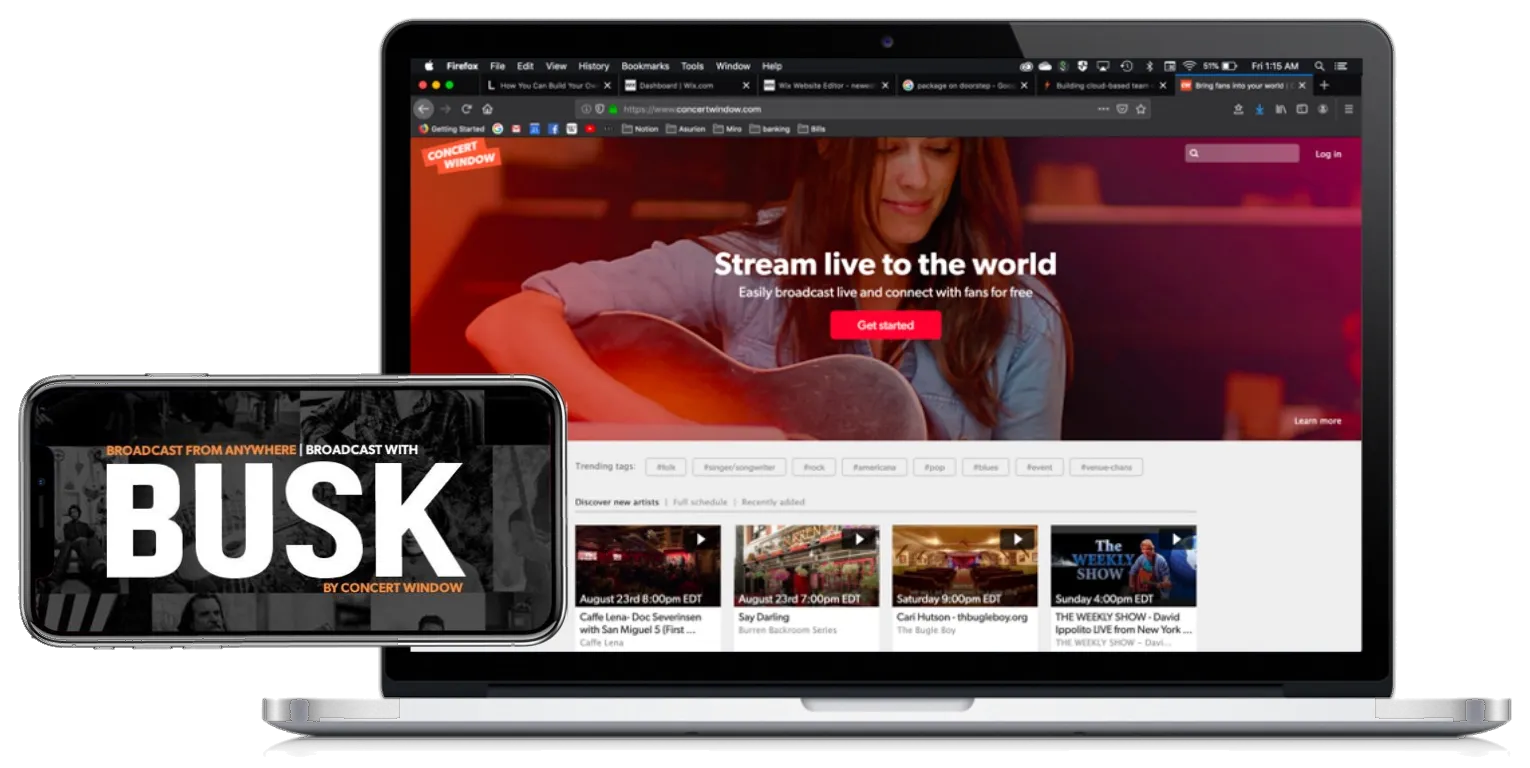
02 / The product
The product
- Musician
- Live performance
- Internet
- Audience
Putting a concert online was relatively easy.Bringing the community with it was harder.
03 / Looking offline
So I went and looked at how it already worked.
As employee number five I embedded myself in the community rather than studying it from outside — talking with musicians around the world, watching shows, speaking with fans and paying attention to how people actually behaved around live music.
What kept surfacing had nothing to do with video quality. A local scene isn’t a set of independent performers who happen to play the same town. It’s a web of people who lend each other audiences.
- Venues
- Artists
- Shared audiences
- Genres
- Promoters
- A time and a place
The thing everything else came from
Music scenes are networks.
- 01Artists share audiences.
- 02Fans discover artists through other artists.
- 03Scenes form around places and genres.
- 04People show up because other people are showing up.
The social context around a performance wasn’t decoration around the product. It was part of the product — and a stream with nobody else watching had quietly thrown it away.
04 / Offline to online
Don’t ask one musician to fill an empty room.
That reframed the strategy. The platform had been asking isolated artists to broadcast into a space with no audience in it and no reason for anyone to be there at a particular moment. Scenes don’t work that way.
So I curated regional and genre festivals: several artists from a community already connected offline, playing across one specific weekend, each promoting to the audience they already had.
- 01An existing music community
- 02A regional or genre festival
- 03Several artists, one weekend
- 04Everyone promotes to their own audience
- 05Audiences arrive together
- 06They discover more artists
- 07The community grows

05 / The result
The result
5×
Monthly users, in three months
- Artists brought their audiences.
- Audiences discovered other artists.
- Communities became distribution.
06 / BUSK
How should performing from a phone feel?
The iPhone app raised a question that wasn’t really about features. Playing to a camera in your kitchen is a different act from playing a venue, and musicians had no name for it — so the product had to explain itself before anyone would try it.
I named it BUSK. A busker doesn’t need a stage or a booking. They pick a spot and play, and the audience is whoever happens to be passing. The phone made almost exactly that possible, so I borrowed the word the culture already had for it.
Busking
- Pick up an instrument
- Find a place
- Perform
BUSK
- Pick up your phone
- Go live
- Perform
The name did work the interface couldn’t. It told a musician how to use the thing, not what the software was.
Looking back
Sometimes the best way to design an online community is to understand how the community already behaves offline.
We didn’t invent the community.We gave it somewhere new to gather.